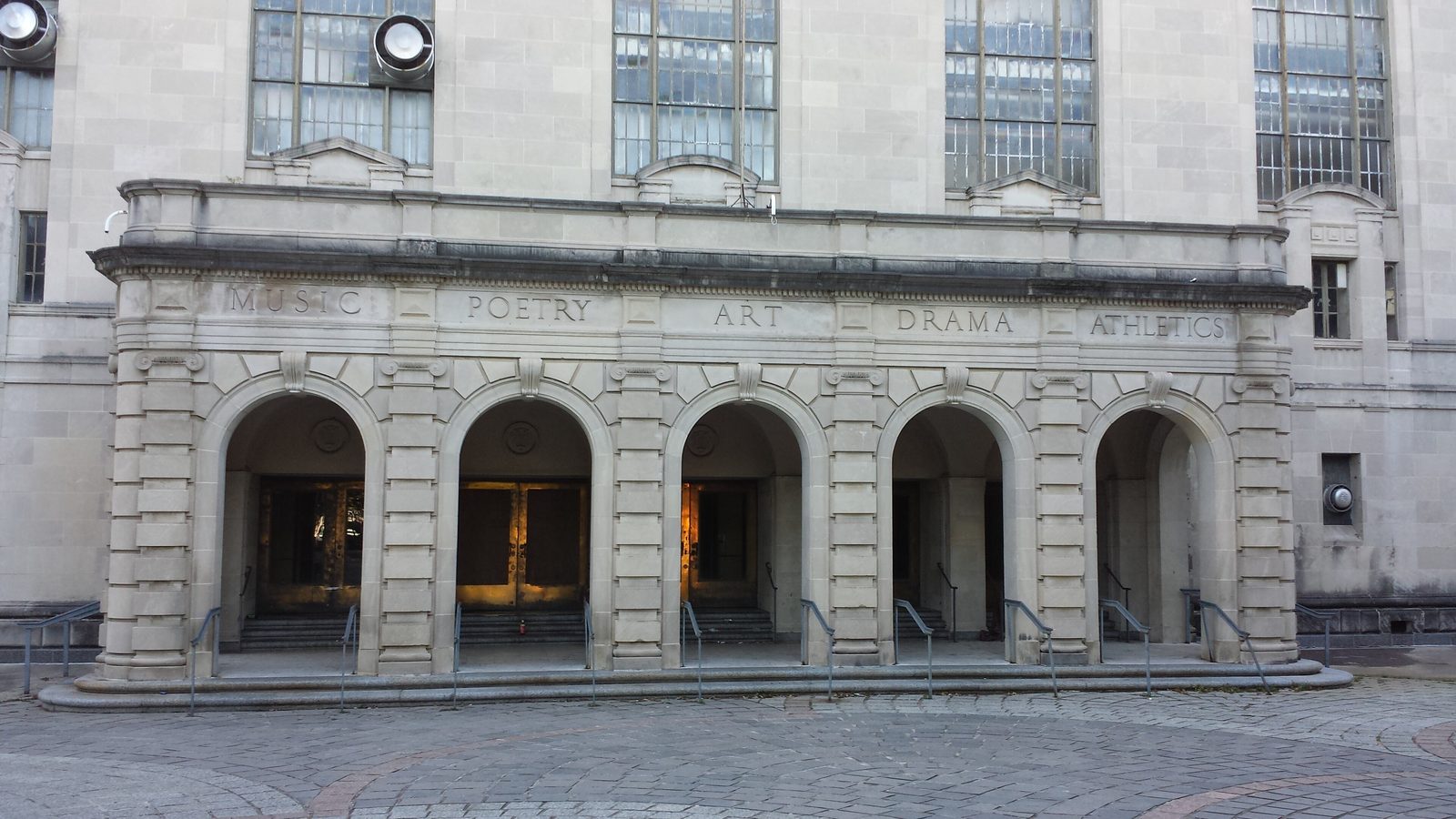
There is a building in New Orleans that has heard more music than almost any room in America. It sits inside Louis Armstrong Park, next to Congo Square, in the Tremé neighbourhood — the oldest African American neighbourhood in the country, a place where enslaved people gathered on Sundays for two centuries to play music and practice the rituals that would seed jazz, the blues, and everything that followed. The building is the Morris F.X. Jeff Municipal Auditorium, opened in 1930, and it has hosted Louis Armstrong, Mahalia Jackson, Fats Domino, Elvis Presley, Led Zeppelin, and the first George Clinton Mothership landing in 1976. On a Saturday night in April 2001, it hosted Van Morrison and B.B. King — two musicians with almost nothing in common except everything that matters.
The 2001 New Orleans Jazz and Heritage Festival was the 32nd edition, and by any measure it was extraordinary. Total attendance across seven days reached 650,000 — shattering every previous record. Opening day alone drew 77,000, more than the previous record by 15,000. The festival that year was also anchored by a centennial tribute to Louis Armstrong, who would have turned 100 in 2001, giving the whole thing an extra weight of history and purpose. New Orleans was celebrating itself, and the world had come to watch.
The evening concert series was housed at the Municipal Auditorium — a 7,853-seat room that functioned as the festival's indoor stage, separate from the sprawling outdoor Fair Grounds venue. These were the prestige shows, the pairing-of-legends events, the concerts where the festival programmers got ambitious. That Saturday night, they put Van Morrison and B.B. King together on the same bill.
It was, on paper, an odd pairing. In practice it made complete sense.
To understand what Van Morrison was in 2001, you have to understand what he has always been — and what he has never been.
George Ivan Morrison was born in Belfast in 1945 into a household saturated with American music: his father's record collection ran to Muddy Waters, Hank Williams, Mahalia Jackson, Leadbelly, and Ray Charles. He was playing professionally at fifteen, grinding through German clubs with a showband called the Monarchs, seven sets a night, before forming Them in 1964 and writing "Gloria" — one of the great garage-band anthems — at nineteen. By 1967 he was solo in New York, recording "Brown Eyed Girl." By 1968 he had made Astral Weeks, one of the strangest and most beautiful albums in the history of recorded music, in three days, with jazz session musicians who had never met him before, in a room with no overdubs.
Thirty-three years later, he was still at it. By 2001 he had released thirty-odd albums, won six Grammys, been inducted into the Rock and Roll Hall of Fame and the Songwriters Hall of Fame, and received an OBE. He had also spent those three decades being almost professionally difficult — walking offstage in huffs, giving interviews that were really monologues about the music industry's perfidy, refusing to make eye contact with audiences who had paid to see him, occasionally delivering performances of such transcendent beauty that people wept and couldn't explain why.
His recent album cycle — The Healing Game (1997), Back on Top (1999) — had been among his most warmly received in years, blues and R&B-inflected records that reminded critics and fans why they'd started caring in the first place. He was 55 years old, touring hard, and in one of his more productive creative phases.
The band came out tight. That much was clear from the first song. Van Morrison's live bands are always exceptional — he demands it, expects it, has no patience for anything less — and on this night the musicianship was exactly what it needed to be. The horns especially. Big, bright, New Orleans-right, filling the Municipal Auditorium the way horns are supposed to fill a room that has been hearing horn music since before anyone alive was born. The sound was soulful and locked in, the kind of playing that creates a slipstream and pulls everything into it. The crowd felt it immediately. This was going to be a night.
When "Bright Side of the Road" hit, the room opened up. It is one of those Van Morrison songs — from 1979's Into the Music — that functions almost as a manifesto of joy, a declaration that the world is full of light if you turn yourself toward it. With the horn section pushing and the crowd already on their feet, it felt enormous. Joyful in the specific way that only certain live performances achieve, where the music stops being something you're watching and becomes something you're inside.
And then the sound went wrong.
Not catastrophically, not all at once — but wrong enough that Morrison felt it, and when Morrison feels something is wrong the audience knows. He is constitutionally unable to hide his distress. He is particular about what he hears in the monitors, particular about the relationship between his voice and the room, and when that relationship breaks down something in him breaks down with it. He complained. He stopped songs. He complained again. This is not performance — it is not theatrical temperament deployed for effect. It is the opposite: a man who wants desperately to deliver, who can feel the music he's trying to make just out of reach, and who cannot pretend otherwise.
The crowd understood. That is the remarkable thing about that night. This was a Jazz Fest audience — experienced, devoted, people who had travelled specifically to be in this room, who knew Van Morrison's reputation and had come anyway, or perhaps because of it. They didn't turn on him. They held space. When he walked offstage they waited, and the waiting had a quality to it — not frustration but something closer to collective willpower, a room full of people pulling for the music to find its way back.
Because they had already heard what was possible. The horn section had told them. "Bright Side of the Road" had told them. That is the specific cruelty and gift of a difficult Van Morrison show — you know what he's capable of because you've just heard it, and so when the conditions go wrong you wait, because you know what the conditions being right feels like.
A Van Morrison show at its best is not a show at all. It is a séance. He stands centre stage — motionless, eyes often closed, apparently indifferent to the audience — and begins to work through a song not as a performance but as an investigation. He will repeat a phrase four times, six times, each time from a slightly different angle, the way a musician works a chord progression until something opens up inside it. His voice does things that voices are not supposed to do — the scat passages, the sudden drops into a near-whisper, the ascents into something that sounds like physical pain or physical joy, often indistinguishable from each other. When it works, the music attains what one writer called "a kind of violent transcendence."
That transcendence was in the room on April 28, 2001, moving in and out of reach. The crowd could feel it. That's why they stayed with him.
B.B. King was 75 years old in April 2001, and he had just won two Grammy Awards at the February ceremony — Best Traditional Blues Album and Best Pop Collaboration. He was also, by the estimate of his own official biography, still averaging over 250 concerts a year. The man had played 342 one-night stands in a single year back in 1956, and though the pace had eased somewhat, the essential fact of B.B. King remained unchanged: he was always on the road, always playing, always Lucille in his hands.
He had grown up on a cotton plantation in the Mississippi Delta, the son of sharecroppers, hitchhiked to Memphis in 1947 with $2.50 in his pocket, become a radio disc jockey, and started recording. He had spent fifteen years grinding the chitlin' circuit — the network of Black-owned venues across the segregated South that were the only rooms open to Black performers before the civil rights movement — before the British Invasion brought his music to white audiences who had never heard it. Eric Clapton and Mike Bloomfield named him as a primary influence. The Rolling Stones put him on their 1969 American tour as an opening act, and B.B. King watched in astonishment as lines of white hippies queued up outside the Fillmore in San Francisco to see him. "I stood there and started crying," he later recalled.
By 2001 he had become what Louis Armstrong had been to jazz: the nation's leading ambassador of the blues, beloved across every demographic, the musician who served as the human face of a genre that America had long tried to ignore.
And when B.B. King walked out onto that stage, everything changed.
Not better. Different. The tension that had held the room during Van Morrison's set — that collective leaning forward, that willingness to wait — released all at once into something unambiguously joyful. This is what B.B. King did. He arrived already there. He didn't need to fight his way to it, didn't need the conditions to be right, didn't need the monitors to be perfect or the stars to align. He came out with Lucille, he smiled that enormous smile, and the room became a celebration.
He told stories between songs. He charmed the audience as only a man who has spent fifty years on stage can charm — not performing warmth but radiating it, the way a fire radiates heat. He played Lucille with that unmistakable combination of economy and emotion — never a wasted note, never a showy run, every phrase speaking directly to the phrase before it. "Every Day I Have the Blues." "How Blue Can You Get." Eventually, "The Thrill Is Gone" — the song that had broken him to the mainstream in 1969 and that he would play for the rest of his life, because the audiences would not let him stop, because the song was inexhaustible, because it had not yet said everything it had to say.
He was 75 years old and had played this song thousands of times. It still sounded like news.
The Municipal Auditorium had seen a lot of nights. But this particular shape — the mystic who fights for transcendence, the king who arrives already carrying it, the same audience holding both — was something specific to that Saturday in April, in a room next to Congo Square, in the city that invented the music both men had spent their lives inside.
Van Morrison and B.B. King were not strangers. They had collaborated before, including on the 1993 album Too Long in Exile, where King appeared on a version of "Gloria" alongside Morrison. Their musical DNA was not as different as their personalities suggested.
Think about where each man came from. Morrison grew up in post-war Belfast — a working-class Protestant neighbourhood in a city still carrying the weight of partition, of sectarian tension, of an identity caught between two worlds. He absorbed American music from his father's record collection the way a person absorbs something they desperately need, something that names feelings the world around them doesn't have language for. The blues reached across the Atlantic and found him, and he spent the rest of his life trying to get back to whatever he first heard in those recordings. That hunger never left him. You can hear it in every performance — the searching, the refusal to settle, the fury when the conditions won't let him reach the thing he's reaching for.
King grew up on a cotton plantation in the Mississippi Delta, the son of sharecroppers, in a country that had enslaved his grandparents and was still, in his childhood, systematically denying him the rights of a citizen. He hitchhiked to Memphis at twenty-two with $2.50 in his pocket and built a career in the chitlin' circuit — the network of Black-owned venues that existed because the mainstream rooms were closed to him. The blues was not something he discovered. It was the language of the world he was born into, the sound of people finding joy and dignity in conditions designed to deny both.
Two different kinds of pressure. Two different geographies of pain. Both men had carried that weight into their music and transmuted it into something that made people feel less alone in the world. That is what the blues does. That is what it has always done — it takes the particular suffering of a particular life and makes it universal enough that a kid in Belfast and a sharecropper's son in Mississippi can be shaped by the same tradition, then bring their versions of it to the same stage on the same night in New Orleans, the city where that tradition was born.
That is what the Municipal Auditorium held on April 28, 2001. Two sides of the same coin. Belfast and the Delta. The deep soul of a man who had spent his life chasing something just out of reach, and the deep soul of a man who had spent his life giving it away freely. Both arriving at joy, each in his own way, each carrying everything that had made him.
The building they played in that night has been empty since Hurricane Katrina flooded its basement in 2005. The city has been arguing about what to do with it ever since — a museum, a performance space, a cultural centre, something worthy of what Congo Square was and what this neighbourhood has given to the world. As of 2024, $38 million in FEMA funding has been committed to stabilise the structure. The argument continues.
The stage remembers.