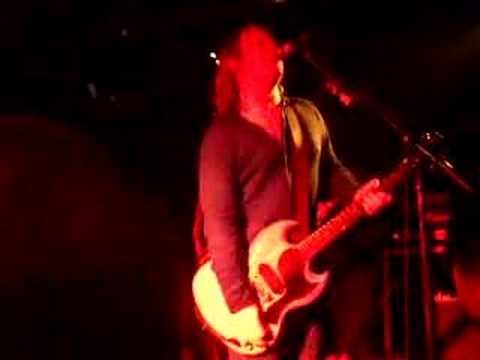
There is a moment in every Iron Maiden show — and it happens every single night, it has happened at every show since roughly 1992 — when the opening notes of "Fear of the Dark" hit the arena and something shifts in the room. Not the usual surge of recognition when a hit comes on. Something deeper and stranger than that. Something that happens in the chest before it registers in the brain.
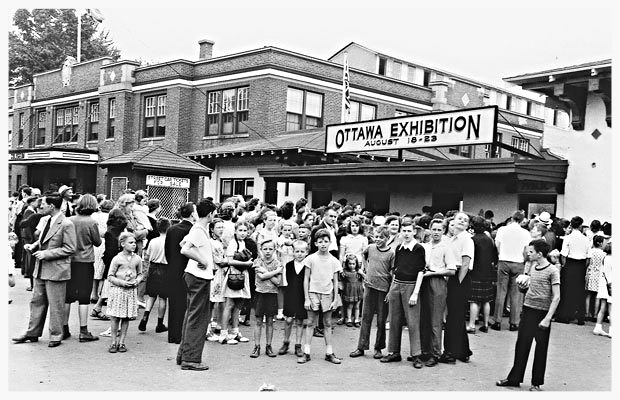
On June 14, 1992, the room in question had spent most of its eighty-nine years hosting livestock exhibitions and boat shows. The Coliseum Building at Lansdowne Park was a historic Ottawa institution — cavernous, utilitarian, smelling faintly of the century of trade fairs and agricultural competitions it had witnessed. The album had been out five weeks. The tour had opened eleven days earlier. Ottawa was only the eighth time "Fear of the Dark" had ever been played live, anywhere on earth.
Iron Maiden walked in like they were headlining Donington.
To understand what was at stake that night, you need to understand where Iron Maiden was in the summer of 1992 — which was, uncomfortably, at a crossroads.
Metallica's The Black Album, Nirvana's Nevermind and Soundgarden's Badmotorfinger had been released within a two-month period in the autumn of 1991, instantly reshaping the rock landscape and leaving Maiden in danger of becoming irrelevant. Bruce Dickinson had felt it acutely. "I was starting to think, 'Well, I'd better have a serious word with the chaps,'" he said. "The world is really changing — not like a bit, but a lot."
Co-founding guitarist Adrian Smith had already left the band during the previous album's writing stage, replaced by Janick Gers. The band were playing smaller venues in the US and fewer dates than ever — a sign that their popularity Stateside was starting to sag in the new musical climate. Dickinson, in interviews, was performing bullish confidence with the conviction of a man who wasn't entirely sure he believed it. "There's a break between Fear of the Dark and the old Maiden albums," he told one magazine. "I really believe that it will make a huge impact — we're going straight into the 90s this time."
What he didn't say publicly — what he was only beginning to understand himself — was that something in him had already started drifting away. He left Iron Maiden right after the tour to focus on his solo career, only to return seven years later in 1999. The Fear of the Dark tour was the last time the classic Dickinson-era Maiden would walk out onto a stage together. Nobody in Ottawa that June night knew that yet. But the tension of a band at a pivot point hung in the air alongside the pyro and the Eddie banners.
The album itself had landed five weeks earlier. Released on May 11, 1992, Fear of the Dark entered the UK chart at number one — their third album to do so — and hit number 12 in the US. It was the first album to be produced by bassist and band founder Steve Harris, and the last to feature the work of longtime producer Martin Birch, who retired after its release.
Harris had converted his Essex barn into a proper recording studio — christened "Barnyard" — after the previous album, No Prayer for the Dying, had been recorded in the same barn with a Rolling Stones Mobile Studio, leading to results Dickinson diplomatically described as having "big limitations."
The album's musical style showed experimentation in multiple directions: "Be Quick or Be Dead" went harder and thrashier than anything they'd done; "Wasting Love" was their first genuine power ballad; "Afraid to Shoot Strangers" was a six-minute anti-war epic written from the point of view of a Gulf War soldier. "Fear Is the Key" was written around the time the band learned of Freddie Mercury's death — about the fear in sexual relationships in the AIDS era. Dickinson explained: "Nobody cares 'til somebody famous dies. And that's quite sadly true."
And then, closing the album, the title track. A song so enormous it seemed to resist being contained on record — built for open fields and festival stages and fifty thousand voices under a summer sky. It was about to find out what it could do in a hall that had last seen a boat show.
The Ottawa show was the second Canadian date of the North American leg — Quebec City the night before, Montreal two days after. Testament and Corrosion of Conformity opened. Then Maiden hit the stage and played fourteen songs before "Fear of the Dark" — a decade's worth of ammunition: "The Number of the Beast," "Wrathchild," "Hallowed Be Thy Name," "Run to the Hills." The crowd had been on their feet for two hours. The Coliseum had been shaking.
The song opens slowly — that hesitant, building guitar figure that creeps up on you like something following you down an unlit street. Harris wrote it because he genuinely was afraid of the dark. The most commanding rhythm section in heavy metal history, animated by a childhood fear of the shadows.
By the time Dickinson unleashes the full vocal in the chorus — that enormous, operatic arc of a melody that sounds like it was designed to be sung by fifty thousand people in an open field — it was filling the rafters of a historic exhibition hall with a concrete floor and a century of livestock shows in its bones. And it didn't matter. The song swallowed the room whole. That's how you know something is built to last: it doesn't need the right room. It brings the room with it.
Only two songs from the entire Fear of the Dark album would survive on setlists after 1993: the title track and "Afraid to Shoot Strangers." "Fear of the Dark" has been on the setlist of every subsequent Maiden tour since, with one exception. Every crowd that has ever heard it live has added their voice to it. The Ottawa crowd on June 14, 1992 were among the first — packed into a hall built for trade shows, watching a song become immortal.
The stage remembers.