She was 21 years old. She had just released the album that would change everything. And she had come home to play a bar.
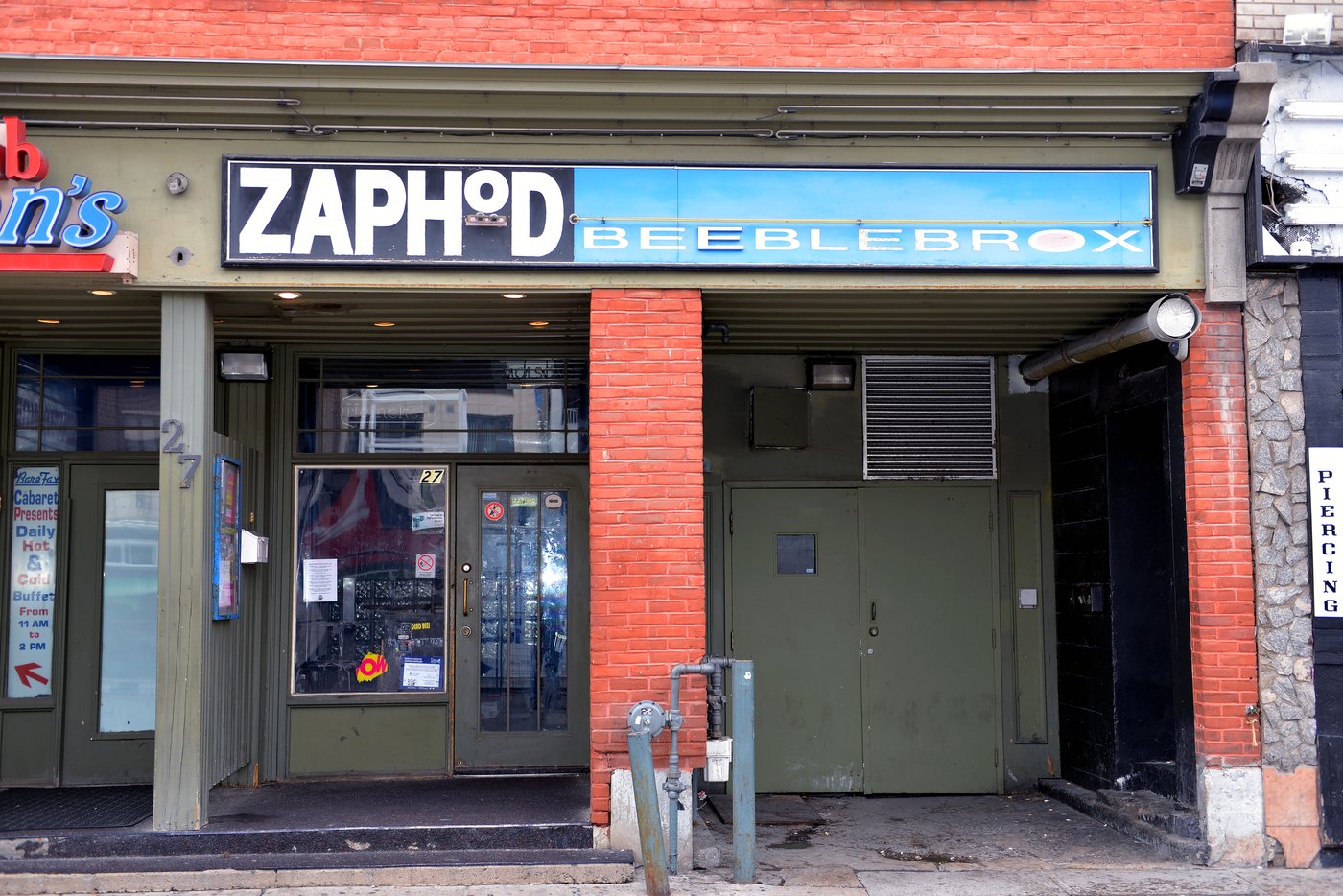
Jagged Little Pill was released on June 13, 1995. Seven days later, Alanis Morissette was standing on the stage at Zaphod Beeblebrox — a small club on York Street in Ottawa's ByWard Market, a short walk from Parliament Hill, steps from the Rideau River — playing to the city that had watched her grow up. The same city that had watched her search for her sound, then leave, then disappear into Los Angeles with nothing but her voice and a determination nobody quite understood yet.
The full arc of this story starts much earlier, and much stranger.
Alanis Morissette was born in Ottawa in 1974, the daughter of a teacher mother and a high school principal father. She began studying piano, ballet and jazz dance at age six and turned to writing songs at age nine. At age twelve, she acted in a season of the Nickelodeon children's TV series You Can't Do That on Television. She used her earnings from that show to record her first single, at thirteen.
By sixteen she had a record deal. Her debut album Alanis was recorded at Distortion Studios in Ottawa between September and December 1990, when she was just sixteen years old. It went platinum in Canada. Its first single "Too Hot" hit the top twenty. She won the Juno Award for Most Promising Female Vocalist. Ottawa's local TV stations ran profiles of her. Her version of "O Canada" was played over the PA at her high school every morning.
According to Morissette, people from the label placed "hardcore" pressure on her to lose weight in time for the album's release, leading her to develop anorexia nervosa and bulimia. She was a teenager going straight from school to the recording studio, staying until 3 or 4am. She was being shaped, packaged, and presented as Canada's answer to Debbie Gibson — a description that, as she would later make ferociously clear, missed the point of her entirely.
Her second album, Now Is the Time, sold only a little more than half the copies of the first. With her two-album deal complete, Morissette was left without a recording contract. At eighteen, it looked like her career was already over. The teen pop moment had passed. The industry had moved on.
She didn't.
What happened next is one of the great second-act stories in music.
After being dropped by MCA, Morissette spent a year in Toronto writing obsessively — she later described having a writing session in the morning and another at night, seven days a week, Saturdays and Sundays. Then she went to Los Angeles with nothing settled and no one waiting. She was held up at gunpoint. She was broke. She tried to find someone to work with, but no one seemed to click.
Then she found Glen Ballard. She walked into his studio in Encino in March 1994, just weeks after a major earthquake had shaken the city. Within 30 minutes of meeting, they had begun experimenting with different sounds. Ballard described her as intellectually sophisticated, with no ceiling. The pair sought to write and record one song a day, in twelve or sixteen hour shifts. All of Morissette's vocals on the final album were kept from those original demos, each captured in only one or two takes.
By the end of 1994, Ballard later recalled, he was deeply depressed. They had all these songs and no one had signed them. "I actually didn't know if I was actually going to see her again," he said. "It was just like — what a bummer. Because I thought there was something special there."
By January 1995, having been passed over by many labels, Maverick Records executive Guy Oseary arranged a meeting. Oseary said he got interested right at the beginning of "Perfect" — "the first time I heard anyone tell stories that way." Within two days, Morissette was signed.
The drummer on the resulting album was a then-unknown Taylor Hawkins, later of the Foo Fighters. The bassist was Chris Chaney, now of Jane's Addiction. The lead single "You Oughta Know" featured Dave Navarro on guitar and Flea on bass.
Jagged Little Pill was released on June 13, 1995. It sold 33 million copies worldwide. It is the highest-selling debut album by a female artist in US history, the best-selling debut album ever worldwide, and the best-selling album of the 1990s. Morissette won five Grammy Awards, becoming at 21 the youngest Album of the Year winner in history.
None of that had happened yet on June 20, 1995. The album had been out for seven days. Nobody in Ottawa — or anywhere — fully understood what was coming.
Zaphod Beeblebrox was the right room for that kind of night. It had always been a place for things that hadn't happened yet.
Eugene Haslam originally opened the venue on Rideau Street in August 1989, but was shut down in January 1991 when Bell Canada purchased the property for its telephone facilities. He reopened on York Street in March 1992. The club was themed after Douglas Adams's The Hitchhiker's Guide to the Galaxy — drinks with names like the Pan Galactic Gargleblaster, a vibe styled after "the worst dressed sentient being in the universe."
Haslam described the spirit of the place in a 1995 interview: "When I walk in and see a bunch of people hanging out together, and some people are in suits and ties, and then you've got this guy beside you with a nose ring and this girl beside you with a navel ring. It's people coming together."
Zaphod's hosted Jewel, The Sheepdogs, Ani DiFranco, Bif Naked — and Alanis Morissette, who previewed her chart-topping album there. The Rolling Stones, a decade later, would shoot part of their video for "Streets of Love" in the same room. But on June 20, 1995, none of that history existed yet. The room was just a ByWard Market club, and the woman on the stage was just a twenty-one-year-old Ottawa girl playing songs her hometown had never heard.
The setlist from the Zaphod show was the first stop on a Canadian run that moved to Montréal the following day, then Toronto two days after that. The full "Can't Not Tour" officially launched on July 1 and would run for 252 shows across 28 countries over 18 months.
But June 20 came first. Ottawa came first.
There is something almost unbearably poignant about that. This was the city where she had been figuring out who she was, where she had been handed an image that didn't fit, where the industry had caught up with her before she had caught up with herself. And now she was back with a record that blew all of that away — standing on a small stage in a Hitchhiker's Guide-themed bar, playing "You Oughta Know" and "Hand in My Pocket" and "Ironic" to a room of people who had grown up alongside her, some of whom had probably written her off.
Morissette had told the label she was unwilling to take one more meeting where she had to describe what she could do rather than evidence it. "They'll see," she had said.
Zaphod Beeblebrox closed permanently in May 2017, after 26 years in the ByWard Market. Ottawa's music community mourned it as a mainstay of the city's live entertainment scene — a place that had hosted acts across a broad spectrum of musical genres and served as a launching pad for emerging artists.
The stage remembers.